Autosomal Dominant Leukodystrophy destroys the brain's myelin and leaves families with no treatment options and no answers. The ADLD Center is funding the science, running the trials, and building the global community this disease has never had.
For Patients & Caregivers
Living with ADLD, or caring for someone who does, can feel overwhelming. These guides give you clear, plain-language answers.
Autosomal Dominant Leukodystrophy (ADLD) is a rare, slowly progressive genetic disorder that affects the central nervous system: your brain and spinal cord.
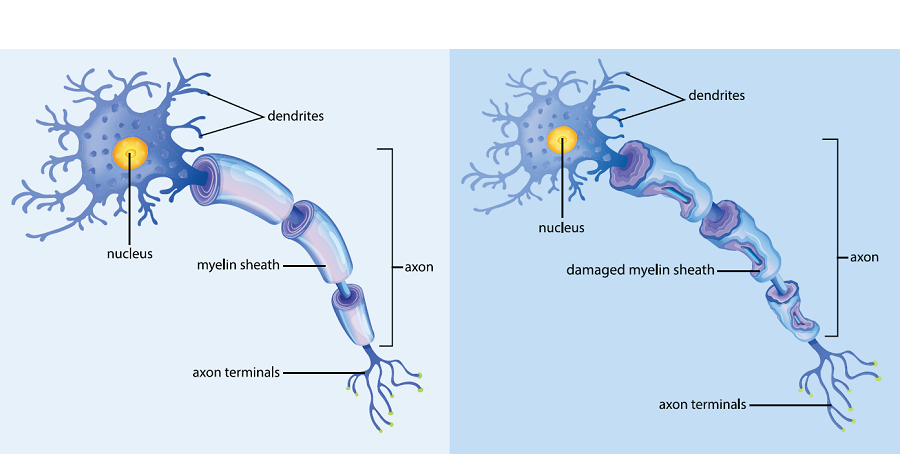
Think of your nerves as electrical wires. In a healthy body, these wires are coated in protective insulation called myelin (often called "white matter"). Myelin helps electrical signals travel quickly and smoothly from your brain to the rest of your body. In people with ADLD, the body slowly loses this myelin, a process called demyelination. When the insulation wears away, signals slow down or stop working properly.
ADLD is caused by a genetic mutation in the LMNB1 gene. This gene instructs your body to produce a protein called Lamin B1, which forms the structural shell around the nucleus inside your cells. Most people with ADLD have an extra copy of this gene (a "duplication"), causing the body to produce a toxic, excess amount of Lamin B1. This excess protein specifically damages the brain cells responsible for creating and maintaining myelin.
No. Because both diseases damage myelin, ADLD is sometimes misdiagnosed as MS early on. However, they are fundamentally different. MS is an autoimmune disease that typically begins in a person's 20s or 30s. ADLD is a genetic disease; symptoms generally do not appear until ages 40 to 60.
ADLD is "autosomal dominant." If one of your parents has ADLD, there is a 50% chance you inherited the mutation, and a 50% chance of passing it on to each of your children.
References
Unlike many genetic conditions, ADLD does not show up in childhood. Symptoms usually begin between ages 40 and 60 and progress slowly over 10 to 20 years. The disease typically moves through three stages:
The Autonomic Phase (Early Signs)
The very first signs usually involve the autonomic nervous system: the part of your body that controls unconscious functions. This may include sudden drops in blood pressure when standing (dizziness), bladder control issues, constipation, erectile dysfunction, or a loss of sweating.
The Motor Phase
Months or years later, patients begin experiencing movement issues. This often starts in the legs, causing muscle stiffness (spasticity), weakness, intention tremors (shaking when trying to move), and difficulty with coordination and walking.
The Cognitive Phase
Mild cognitive impairment or personality changes may occur, but usually only in the later stages of the disease.
MRI Scans
An MRI of the brain and spine is the most sensitive tool for spotting ADLD. It shows a highly specific pattern of myelin loss, often including a "dark rim" sign around the brain's ventricles and early atrophy of the spinal cord.
Genetic Testing
To confirm ADLD, a specialized genetic test is required. Standard DNA tests (like whole-exome sequencing) are not recommended; they often miss the large structural duplications that cause ADLD. You need a single-gene test capable of high-resolution structural variant detection.
References
While there is currently no cure for ADLD, assembling the right medical team can drastically improve your comfort, mobility, and quality of life. ADLD requires a team-based approach to care.
Your core team should include a neurologist to oversee care, a physical therapist, and a genetic counselor. As symptoms develop, ask for referrals to:
Your team can prescribe medications to manage specific symptoms. Muscle relaxants (like baclofen or tizanidine) or botulinum toxin injections can relieve muscle stiffness and spasticity. There are also excellent medications available to help treat overactive bladder, manage blood pressure drops, and relieve constipation.
Use a Shower Chair
Prevent falls in the bathroom. Head trauma can worsen your condition; don't risk it.
Stand Up Slowly
To manage blood pressure drops, always transition slowly from lying to sitting, then sitting to standing.
Invest in Cushioning
A waffle-cushion or alternating air pressure mattress pad prevents painful pressure sores for patients seated or in bed for long periods.
Stay Cool
ADLD can impair sweating. Keep PVA cooling towels in the fridge or use cooling vests to avoid overheating.
References
A diagnosis of ADLD can feel overwhelming, not just physically, but emotionally. Protecting your mental health and communicating with your family are critical parts of your care plan.
Do not hesitate to ask for help. It is incredibly common to experience grief, anxiety, or depression when navigating a rare disease.
Talk to a Professional
Ask your neurologist for a referral to a counselor or neuro-psychiatrist. Medications like SSRIs are highly effective and commonly used to treat depression in ADLD patients.
Join a Support Group
You are not alone. Organizations like the United Leukodystrophy Foundation (ULF) and Global Genes offer virtual support groups and incredible community resources.
Because ADLD is autosomal dominant, patients have a 50% chance of passing the mutation to their children. If you or an at-risk family member wish to conceive, prenatal genetic counseling should be offered.
You have options. Many patients explore In Vitro Fertilization (IVF) combined with Pre-implantation Genetic Testing (PGT). Embryos are created in a lab, tested for the ADLD mutation, and only embryos without the mutation are transferred, ensuring the disease is not passed on. The use of donor eggs or sperm can also be explored.
References
For the first time, we are moving from understanding ADLD to treating it. The ADLD Center is running six research programs in parallel to find a cure.
The first ADLD patient recently began receiving an experimental genetic therapy, an antisense oligonucleotide (ASO), as part of an n=1 (single-patient) clinical trial. Delivered via spinal injection to directly target the brain, this drug aims to silence the overactive LMNB1 gene. This foundational trial will prove the drug is safe and effective, paving the way for expanded trials.
We are running a global, remote Natural History Study to track how ADLD progresses over time. Because ADLD is so rare, it is unethical to give patients a placebo in future trials. By mapping the natural progression now, we can use this data as a "synthetic control arm" to prove to the FDA when a new drug is working, ensuring every future trial participant receives the actual medicine.
Learn about enrolling; participation is remote and free โCreating a brand new drug takes years. A faster path starts with drugs that are already FDA-approved for related diseases. For ADLD, we are testing farnesyltransferase inhibitors (already approved for Progeria, which shares the same lamin biology) and screening other approved compounds in ADLD cell models with our drug discovery partners.
Post-mortem brain donation is one of the most profound gifts a family can give to science. Brain tissue allows researchers to uncover exactly how ADLD destroys myelin and test new therapies on human tissue. If you are interested in registering as a donor, please contact the ADLD Center to coordinate with our tissue bank partners.
References
Get Involved
Enroll in the Natural History Study
Participation is remote and completely free.
For Scientists & Researchers
ADLD is driven by a toxic gain-of-function from LMNB1 overexpression. Below you will find the latest on molecular pathogenesis, preclinical models, and the 2025 clinical practice guidelines.
Autosomal Dominant Leukodystrophy (ADLD) is a progressive neurodegenerative disorder uniquely driven by a toxic gain-of-function from overexpression of the LMNB1 gene, caused either by a tandem genomic duplication of LMNB1 or by large upstream deletions. Recent 3D genomic architecture studies indicate that pathogenesis relies heavily on disruption of Topologically Associating Domains (TADs). In upstream deletions, TAD boundaries are destroyed, allowing "enhancer adoption" where foreign forebrain/midbrain enhancers hijack the LMNB1 promoter. In duplication cases, the loss of an oligodendrocyte-specific silencer element allows LMNB1 to escape normal repression.
At the cellular level, Lamin B1 accumulation impacts both oligodendrocytes and astrocytes:
Therapeutic development utilizes the PLP-LMNB1Tg mouse model, which targets Lamin B1 overexpression specifically to oligodendrocytes and successfully recapitulates the late-onset, age-dependent demyelination, ataxia, and severe motor dysfunction seen in human patients. On the in vitro front, researchers utilize patient-derived iPSC neurons and high-content drug screening platforms to map disease networks and evaluate transcriptomic readouts.
A critical bottleneck remains the lack of validated, quantitative biomarkers. Efforts are underway to identify reliable fluid biomarkers (plasma miRNAs, CSF lactate) and develop computational MRI grading systems to reliably track disease progression during clinical trials.
The first consensus clinical practice guidelines for ADLD were published in 2025. Key conclusions: whole-exome sequencing (WES) is not recommended as a first-tier diagnostic tool because it often misses structural variants. Diagnosis requires single-gene testing capable of high-resolution structural variant detection. The guidelines also established standardized baseline and longitudinal surveillance protocols utilizing brain and cervical spine MRIs, tilt table testing, and neuropsychometric assessments.
References
Access full publications, grant opportunities, and institutional partnership details.
View ResourcesFor Pharma & Biotech Partners
ADLD presents a de-risked pathway in an ultra-rare indication: a well-defined mechanism, Orphan Drug incentives, an active n=1 trial, and a Natural History Study designed as a synthetic control arm.
While ADLD is ultra-rare (approximately 45 families described globally as of 2026; Orphanet classifies it at <1 per 1,000,000), the underlying pathogenic mechanism of LMNB1 overexpression presents a highly scalable therapeutic target. LMNB1 overexpression is a well-documented driver in much larger oncological indications including lung adenocarcinoma and hepatocellular carcinoma, as well as DNA repair syndromes like Ataxia Telangiectasia. Developing RNAi, ASO, or shRNA therapies that successfully downregulate LMNB1 for ADLD not only qualifies for Orphan Drug incentives but provides direct proof-of-concept for broader pipeline expansion into massive oncology markets.
The ADLD Center has proactively dismantled traditional rare-disease development bottlenecks:
Synthetic Control Arms
We are actively enrolling a globally coordinated, remote Natural History Study explicitly designed to serve as an external/synthetic control for future trials, aligning with FDA guidance to eliminate the ethical and logistical barriers of placebo arms in fatal progressive rare diseases.
Patient Identification
The recent approval of a dedicated ICD-10 code (G90.B) for ADLD streamlines patient recruitment and Electronic Health Record (EHR) data mining for clinical trial enrollment.
Active Proof of Concept
We have successfully initiated a first-in-human n=1 clinical trial utilizing an intrathecal antisense oligonucleotide (ASO), generating critical preliminary safety and tolerability data to pave the way for expanded multi-patient trials by 2026.
Alongside the ASO trial, the ADLD Center is advancing two additional therapeutic programs:
shRNA Program
A short hairpin RNA (shRNA) approach to knocking down LMNB1 expression, complementary to the ASO platform. The ADLD Center has identified shRNA sequences worth developing and is advancing them toward preclinical validation.
Drug Repurposing
Prior screens with Transcriptabio (Rarebase) established the feasibility of repurposing FDA-approved compounds for ADLD. Current programs include published work from the Padiath lab at the University of Pittsburgh and ongoing screens led by Elisa Giorgio and Stefano Ratti in Italy.
Explore partnership opportunities: clinical collaboration, data access, and licensing.
Get in TouchFree Resource
Your complete guide to understanding, managing, and finding support for Autosomal Dominant Leukodystrophy, written for patients, caregivers, and families navigating a new diagnosis.
Download Free PDF